Which is better - Fast & Reliable Top1-5
# RFID vs NFC: Which is Better for Your Application?

 In the world of wireless communication and identification technologies, two prominent players often come into comparison: **RFID** (Radio-Frequency Identification) and **NFC** (Near Field Communication). Both serve critical roles in various industries, from logistics and retail to access control and mobile payments. However, determining which is better depends entirely on your specific needs, application context, and operational requirements. This article will delve into the technical distinctions, practical applications, and situational advantages of each technology, helping you make an informed decision.
## Understanding the Core Technologies
### What is RFID?
**RFID** is a broad technology used for identifying and tracking objects using radio waves. It typically consists of a reader and a tag. The tag, which contains electronically stored information, can be passive (powered by the reader's signal), active (with its own power source), or semi-passive. RFID systems operate across various frequency bands: Low Frequency (LF, 125-134 kHz), High Frequency (HF, 13.56 MHz), and Ultra-High Frequency (UHF, 860-960 MHz). The read range varies significantly—from a few centimeters for HF to over 10 meters for active UHF systems.
### What is NFC?
**NFC** is a subset of RFID technology, specifically operating at the HF band of 13.56 MHz. It is designed for very short-range communication (typically less than 10 cm) between two devices. NFC enables two-way communication, meaning an NFC device can act as both a reader and a tag (a mode called peer-to-peer). This is a key differentiator from most RFID implementations, which are primarily one-way (reader to tag). NFC is built into most modern smartphones, which has driven its adoption in contactless payments, data sharing, and smart device pairing.
In the world of wireless communication and identification technologies, two prominent players often come into comparison: **RFID** (Radio-Frequency Identification) and **NFC** (Near Field Communication). Both serve critical roles in various industries, from logistics and retail to access control and mobile payments. However, determining which is better depends entirely on your specific needs, application context, and operational requirements. This article will delve into the technical distinctions, practical applications, and situational advantages of each technology, helping you make an informed decision.
## Understanding the Core Technologies
### What is RFID?
**RFID** is a broad technology used for identifying and tracking objects using radio waves. It typically consists of a reader and a tag. The tag, which contains electronically stored information, can be passive (powered by the reader's signal), active (with its own power source), or semi-passive. RFID systems operate across various frequency bands: Low Frequency (LF, 125-134 kHz), High Frequency (HF, 13.56 MHz), and Ultra-High Frequency (UHF, 860-960 MHz). The read range varies significantly—from a few centimeters for HF to over 10 meters for active UHF systems.
### What is NFC?
**NFC** is a subset of RFID technology, specifically operating at the HF band of 13.56 MHz. It is designed for very short-range communication (typically less than 10 cm) between two devices. NFC enables two-way communication, meaning an NFC device can act as both a reader and a tag (a mode called peer-to-peer). This is a key differentiator from most RFID implementations, which are primarily one-way (reader to tag). NFC is built into most modern smartphones, which has driven its adoption in contactless payments, data sharing, and smart device pairing.
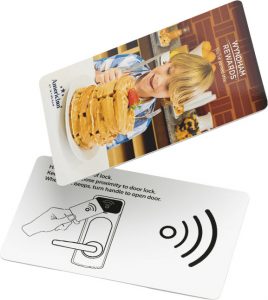 ## Key Technical Comparison: Range, Speed, and Security
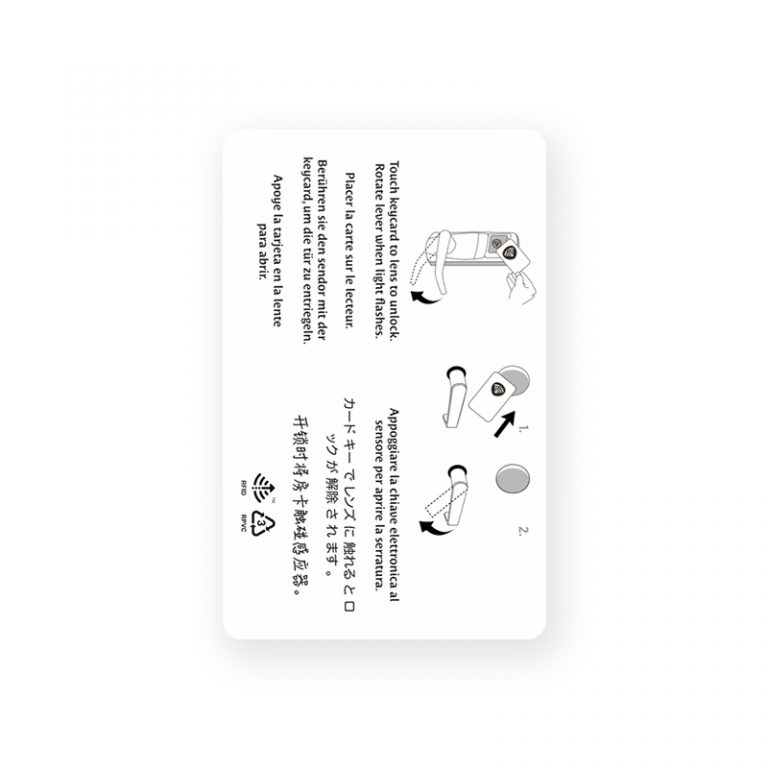 When evaluating **RFID vs NFC**, technical parameters are crucial. Here’s a comparative breakdown:
| Feature | RFID (UHF Passive) | NFC (HF 13.56 MHz) |
|---------|-------------------|-------------------|
| **Operating Frequency** | 860-960 MHz | 13.56 MHz |
When evaluating **RFID vs NFC**, technical parameters are crucial. Here’s a comparative breakdown:
| Feature | RFID (UHF Passive) | NFC (HF 13.56 MHz) |
|---------|-------------------|-------------------|
| **Operating Frequency** | 860-960 MHz | 13.56 MHz |
 | **Typical Read Range** | Up to
Future of RFID Blocking Technology
As RFID technology evolves, so does blocking technology. Future blocking cards may be smarter and integrate more functions.
Key Trends: Integration with digital security apps, biometric authentication, and multi-layer protection systems.
Legal Aspect of RFID Privacy Protection
Different countries and regions have different laws regarding RFID privacy protection. Understand your rights and legal protections.
RFID Security Statistics & Trends
Understanding the current landscape of RFID security helps you make informed decisions about protection.
These statistics highlight the growing importance of RFID protection in today's digital age.
RFID Blocking Card Price Comparison
Compare different RFID blocking card options to find the best value for your needs.
- Blocks RFID signals
- Slim design
- 1-year warranty
- No multi-device protection
- Advanced signal blocking
- Multi-card protection
- 3-year warranty
- Water-resistant design
- 2 blocking cards
- RFID-blocking wallet
- 5-year warranty
- Free security guide
Note: Prices may vary based on retailer and promotional offers. Always purchase from authorized sellers.